-
E-mail
2212240822@qq.com
-
Phone
18911395947
-
Address
514, Unit 1, Building 2, Xingfu Square, Gu'an County, Langfang City, Hebei Province
Beijing Beiguang Jingyi Instrument Equipment Co., Ltd
Is a thermogravimetric analyzer the same as a differential scanner?
Date: 2025-12-24Read: 0
Thermogravimetric analyzer (TGA) and differential scanning calorimeter (DSC) are two different thermal analysis instruments, which have significant differences in measurement principles, application fields, and functions. Simply put, TGA mainly measures the mass change of materials during heating, while DSC measures the thermal difference between the sample and the reference material.
1. Different measurement principles
Thermogravimetric analysis (TGA): By measuring the mass change of the sample under programmed temperature control conditions, the thermal stability, component content, and thermal decomposition law of the material are studied.
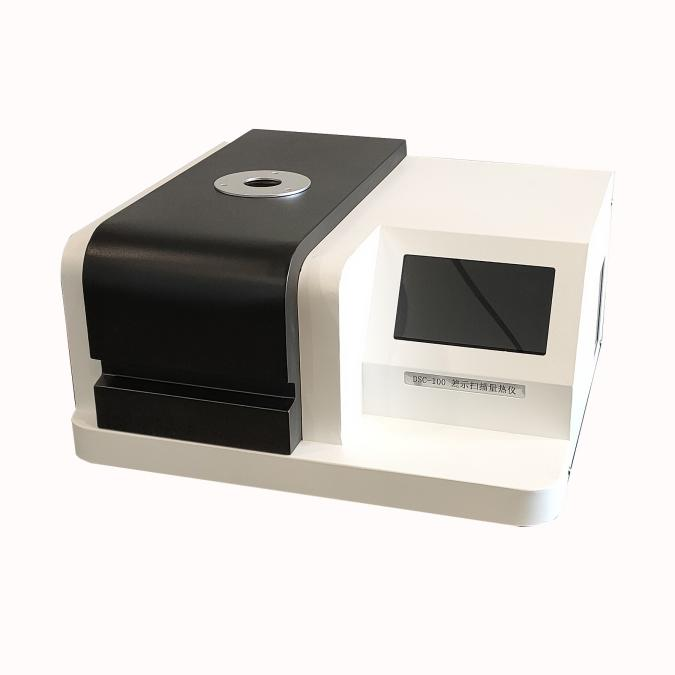
Differential Scanning Calorimeter (DSC): It studies the thermal properties of materials, such as melting, crystallization, phase transition, etc., by measuring the difference in heat between the sample and the reference material during heating or cooling.
Different application fields
TGA: widely used in fields such as materials science, chemical engineering, biomedicine, etc., for evaluating the thermal aging performance of materials, studying catalyst deactivation mechanisms, and detecting drug moisture content.
DSC: mainly used to study the thermal properties of materials such as melting, crystallization, phase transition, crystallinity, solidification degree, purity, glass transition temperature, and specific heat capacity.
Different functions
TGA: It can quantitatively determine key parameters such as volatile component content, thermal decomposition temperature, and residual amount in the sample.
DSC: It can quantitatively measure thermodynamic and kinetic parameters such as hot melt, entropy, and specific heat capacity, and study the phase transition of inorganic substances.
Different instrument structures
TGA: The core components include a controllable atmosphere heating furnace and a high-precision balance, used for continuous detection of sample quality changes.
DSC: It consists of a temperature controlled furnace, temperature controller, heat compensator, amplifier, recording and data processing unit, etc. The sample and reference material are each equipped with independent heaters and temperature control circuits.
Different interpretations of data
TGA: By analyzing the steps, slopes, and other characteristics of the mass temperature/time curve (TG curve), key parameters such as volatile component content, thermal decomposition temperature, and residual amount in the sample can be quantitatively determined.
DSC: By analyzing the exothermic or endothermic peaks of the heat flux temperature/time curve (DSC curve), information such as the glass transition temperature, melting, crystallization, crosslinking and solidification of the material can be obtained.
Joint technology
TGA-DSC-MS: Thermogravimetric analysis differential scanning calorimetry mass spectrometry is extremely useful for analyzing the composition, structure, and studying the thermal decomposition mechanism of substances.
Test temperature range
TGA: Room temperature to 1000 ℃.
DSC: Room temperature~1500 ℃ or -50~550 ℃.
Sample submission requirements
TGA: Solid powders, lumps (with at least one flat surface), liquids that do not decompose or sublime corrosive substances within the tested temperature range.
DSC: Sample size: No less than 30 mg for single detection of inorganic or organic materials.
test conditions
TGA: General testing conditions (nitrogen environment, room temperature~980 ℃, heating rate 10K/min).
DSC: If the testing conditions are changed, an additional sample fee will be required.
Sample delivery instructions
TGA: Please indicate the testing temperature and heating rate when sending samples.
DSC: Please indicate the testing temperature and heating rate when sending samples.
Precautions for instrument operation
DSC: The temperature of the sample and the reference material is always equal, avoiding heat transfer between the reference material and the sample. Therefore, the instrument has sensitive response, high resolution, and good reproducibility.
data interpretation
TGA: A typical TG chart.
DSC: In the upper left or lower left position of the DSC curve, there will be an arrow indicating the exothermic peak, which may be downward or upward. The setting of each instrument is different and can be manually modified.
instrument structure
DSC: It has two disks, one is the sample disk, which contains the sample, and the other is the reference disk. The reference disk is an empty disk. After the power is turned on, we can heat it up or down, and the supplied or released heat flow can be reflected on the instrument through sensors.
Instrument application
TGA: In the field of materials, it can evaluate the thermal aging performance of polymer materials and the sintering characteristics of ceramic materials, providing a basis for optimizing material formulations.
DSC: Used in the chemical industry for studying catalyst deactivation mechanisms and analyzing reaction kinetics.
Instrument advantages
TGA: Low sample usage, wide detection range, accurate and reliable data.
DSC: High sensitivity, capable of quantitatively measuring physical quantities such as enthalpy and specific heat capacity.
Instrument development
DSC: By changing the material and structure in the later stage, it is possible to transform from temperature difference to energy difference (heat flow type).
Instrument selection
TGA: If you need to know the changes in sample quality during the heating or cooling process (such as adsorption, desorption, decomposition, etc.), please choose TGA.
DSC: If you need to study the thermal properties of materials such as melting, crystallization, phase transition, crystallinity, curing degree, purity, glass transition temperature, specific heat capacity, etc., please choose DSC.
Last Article: Application fields of voltage breakdown tester