-
E-mail
3440125819@qq.com
-
Phone
18911397564
-
Address
No.1 Shangdi 10th Street, Shangdi Science and Technology Park, Haidian District, Beijing
Beijing Beiguang Jingyi Instrument Equipment Co., Ltd
GB/T 1682-2014 Determination of Low Temperature Brittleness of Vulcanized Rubber Single Sample Method and Sample Preparation
Date: 2025-12-15Read: 0
GB/T 1682-2014 is a Chinese national standard, officially known as "Rubber, vulcanized determination of low temperature brittleness - Single test piece method". This standard was approved by the People's Republic of China on December 31, 2014 and officially implemented on July 1, 2015, replacing the old version from 1994 (GB/T 1682-1994). It is currently an effective technical specification.
Overview of Standard Core Content
Purpose and Scope:
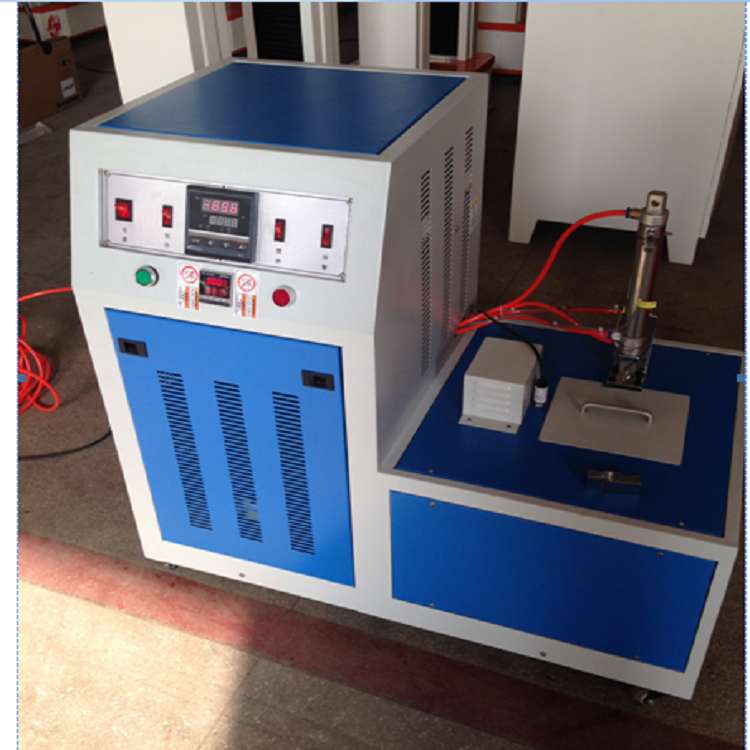
This standard specifies the method for determining the brittleness temperature of vulcanized rubber using a single specimen brittleness temperature testing machine, as well as the procedure for determining whether the rubber is damaged after being impacted at specific low temperatures. Suitable for evaluating the performance of vulcanized rubber in low-temperature environments, such as the cold resistance of automotive tires, seals, and other products, to ensure the safety and reliability of materials under cold conditions.
Key methods and procedures:
programA: Used to determine the brittle temperature by gradually cooling and impacting the sample to determine the critical temperature at which the material fails.
programB: Suitable for directly determining whether rubber has been damaged at a preset temperature, simplifying the testing steps.
Sample requirement: The size is long25.00mm、 Width 6.0mm, thickness 2.0 ± 0.2mm, strict preparation is required to avoid surface defects affecting the results.
Equipment and technical requirements:
Testing machine: using cascade refrigeration technology, with a temperature range covering-70 ℃ to 0 ℃, equipped with a spring impact device (impact head radius of 1.5 ± 0.1mm) to ensure temperature fluctuations are controlled within ± 0.5 ℃.
Cooling medium: Anhydrous ethanol is usually used to maintain purity.
Operation details: After immersing the sample in the freezing medium, it needs to be kept at a constant temperature, and after impact, it needs to be parkedCheck the damage status again for 30 seconds, such as cracks or fractures.
Industry Applications and Importance:
As the core standard for low-temperature performance testing of vulcanized rubber, this specification provides a unified technical basis for automotive, aerospace, polar equipment and other fields, supporting product quality control and research and development.
Its data comparability solves the problem of market chaos, such as playing a key role in the evaluation of low-temperature tire crack resistance.
Prepare in accordance withThe vulcanized rubber specimens in GB/T 1682-2014 shall follow the following steps:
Sample size requirements
Length:25.00mm ±0.5mm
Width:6.0mm ±0.5mm
Thickness2.0mm ± 0.2mm (the 2014 version of the standard adjusted the old version's ± 0.3mm to ± 0.2mm)
Surface: It should be smooth, free of foreign impurities and damage, and the finished product needs to be polished and cut
Preparation method
Mold selection: Use according toThe dumbbell shaped mold according to GB/T 528 standard is made of Cr12MoV alloy tool steel to ensure the accuracy of the cutting edge
Cutting parameters: Control cutting speed5-10mm/s, Pressure range of 0.5-1MPa to avoid damage to molecular chains
Thickness control: Mold preparation through flat plate type(300mm × 300mm) adjustment, flatness ≤ 0.03mm/m
Precautions
The sample needs to be in a standard environment(23 ± 2 ℃, humidity 50 ± 5% RH) for 24 hours
The mold needs to be preheated to60-80 ℃ and constant temperature for 15-20 minutes before laying the adhesive material
After cutting, it is necessary to check the wear of the cutting edge, and the cumulative wear exceeds0.01mm should be ground in a timely manner