-
E-mail
3440125819@qq.com
-
Phone
18911397564
-
Address
No.1 Shangdi 10th Street, Shangdi Science and Technology Park, Haidian District, Beijing
Beijing Beiguang Jingyi Instrument Equipment Co., Ltd
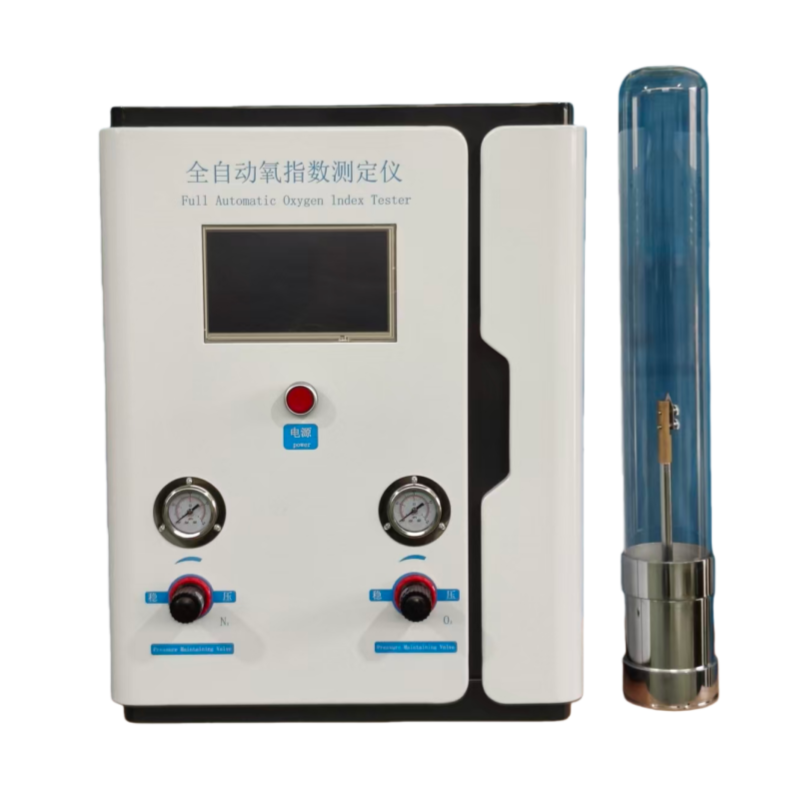
Detailed explanation of the operation steps of the fully automatic oxygen index tester
Date: 2025-12-18Read: 0
Fully automatic oxygen index testerDetailed explanation of operation steps
Gas source preparation
Adjust the pressure of the oxygen cylinder to0.2-0.25 MPa, Adjust the pressure of the nitrogen cylinder to 0.2-0.4 MPa to ensure a stable gas source.
The pressure reducing valve needs to be adjusted slowly to avoid damaging the equipment when fully opened.
Equipment Calibration
Preheat after startupAfter 15 minutes, enter the calibration interface and the system automatically adjusts the oxygen concentration to the standard value (such as 99.5%).
Calibration needs to be completed with the oxygen valve open and the nitrogen valve closed.
Sample installation
Sample size: self-supporting material120mm x 6.5mm x 3mm, using 140mm x 38mm U-shaped clips for film/fabric.
Vertically fixed at the center of the combustion cylinder, with the top distance from the top of the cylinder≥100 mm, The distance from the lower end to the gas distribution network is ≥ 100 mm.
Testing and Recording
Enter the target oxygen concentration (e.g25%), the equipment automatically adjusts the mixed gas after startup.
Observe combustion time: if≥ 180 seconds or damage ≥ 50 mm, oxygen concentration needs to be reduced; Conversely, it increases.
Safety precautions
Testing should be conducted in a fume hood to avoid toxic gas hazards.
It is strictly prohibited to connect flammable gases, and all gas sources should be turned off after the test is completed.
The safety functions of the fully automatic oxygen index tester mainly include the following aspects:
Ventilation and Protection: Testing should be conducted in a fume hood to eliminate toxic and harmful gases generated by sample combustion, and operators should take protective measures.
Gas safety: It is strictly prohibited to connect any flammable gas to prevent the risk of explosion.
Equipment protection: It is necessary to use the specified voltage and ground it to avoid circuit faults.
Operation monitoring: During the experiment, operators are not allowed to leave the site to ensure timely response to unexpected situations.
Emergency measures: Firefighting equipment should be equipped, and all power and gas sources should be turned off after the test is completed.
Intelligent protection: Some models are equipped with emergency stop buttons, explosion-proof glass combustion tubes, and high-temperature resistant inner walls to enhance safety.
These functions collectively ensure the safety of the testing process and the stability of the equipment.