-
E-mail
market@aozuo.com.cn
-
Phone
15811022840
-
Address
Unit 1, 1st Floor, Building 6, Courtyard 3, Haidian District, Beijing
Beijing Aozuo Ecological Instrument Co., Ltd
Literature sharing: The impact of groundwater level changes on greenhouse gas emissions from peatlands
Date: 2025-11-20Read: 0

Although agricultural productivity is high, peat that has been drained and cultivated is highly prone to degradation and is an important source of greenhouse gas (GHG) emissions. This study explores the potential of groundwater level regulation and biochar application in mitigating greenhouse gas losses from agricultural peat. However, balancing agricultural production demand and ensuring the functionality of peat ecosystems is a major challenge under high groundwater level (WT) conditions. Therefore, in a controlled ecological experiment, lettuce was grown and treated with high (HW-10 cm) or low (LW-15 cm) groundwater levels, and the emissions of carbon dioxide (CO ₂), methane (CH ₄), and nitrous oxide (N ₂ O) were monitored over a period of 4 months. Simultaneously measuring soil solution and plant growth, combined with microbial sequencing, to determine key control factors for greenhouse gas emissions.
Compared with the control+low groundwater level (Control+LW), increasing the groundwater level significantly reduced CO ₂ emissions by 18% and N ₂ O emissions by 40%, but ultimately increased CH ₄ emissions by 2.5 times. Compared with Control+LW, the combination of high groundwater level and biochar application has a stronger reduction effect on CO ₂ - equivalent greenhouse gas emissions.
Overall, the combination of high groundwater levels and biochar application increased soil total carbon (C), reduced peat decomposition, suppressed CH ₄ and N ₂ O emissions, and increased crop yields.


This study reveals the impact of groundwater level changes on soil greenhouse gas emissions. The article describes the experimental treatment of controlling the groundwater level, but only mentions two types: high water level and low water level. The water level cannot be controlled in real-time by multiple gradients, and the SoilScope controlled infiltration system also has such a water level control function.
This system adopts the third-generation permeameter technology developed in Australia, equipped with a groundwater connection module to automatically control the water level inside the permeameter column. The precision of water level control can reach 0.2mm, and the precision of water replenishment and drainage can even reach 0.001mm, which can achieve precise control of groundwater level and provide accurate water level data for related research. For example, when studying the impact of groundwater depth on plant transpiration, it is possible to accurately set different groundwater depth gradients and observe the differences in plant transpiration.
By combining high-precision weighing units, sensors, etc., it is possible to directly record changes in moisture content, such as groundwater evaporation, surface runoff, evapotranspiration, condensation, fog, and various precipitation amounts, with accurate and reliable data. Weighing type osmometers can accurately measure evapotranspiration with a resolution of 0.01mm, providing "true value" data for water balance research.
It can simulate different hydrological conditions, such as free drainage, constant water level, dynamic water level change, etc. It can also simulate hydrological events with poor conditions, such as drainage after storm, water replenishment during drought and other scenarios, so as to enhance the simulation ability of the experiment on natural processes. For example, when studying the water and salt transport in saline alkali soils, the drainage control at the bottom boundary can be used to regulate the leaching intensity of soil moisture and clarify the driving mechanism of water movement on salt migration.
Being able to manually set or automatically track the groundwater level in the field, simulate the natural water conditions in the field, make the experimental conditions closer to the real environment, and improve the representativeness and practicality of the experimental results. For example, the automatic tracking water level mode can maintain the water level in the tank at the same level as the groundwater level in the field, which is used to simulate the natural water situation in the field.
In addition, the SoilScope permeameter can take undisturbed soil with a soil column area of 1 square meter and a height of 2 meters.

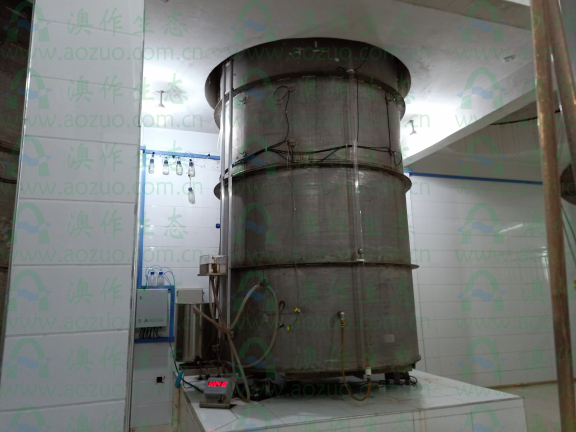
SoilScope control type permeameter automatically controls the groundwater level and high-precision weighing for undisturbed soil
This system combines the SoilGAS CO2 CH4 N2O H2O online monitor with the iChamber LY evapotranspiration canopy chamber to measure soil CO2, CH4, and N2O emission fluxes online and in real-time. The monitoring instrument is based on the principle of laser absorption spectroscopy, with a measurement accuracy of ppb level.

SoilGAS CO2/CH4/N2O online monitoring instrument
The iChamber LY evapotranspiration canopy chamber is independently developed and designed by Ausnutria, with controllable lifting and lowering, no borders or columns, and no impact on microclimates such as rainfall and wind speed at measurement points. It can be used for measuring soil greenhouse gas flux and also as a community photosynthetic chamber.
The multi-channel control of the system configuration can carry up to 27 canopy chambers. The measurement time for each canopy chamber can be set

IChamber LY evapotranspiration canopy chamber