-
E-mail
hwaenii@163.com
-
Phone
18930917376
-
Address
No. 3216, Shanghai Hangzhou Highway, Fengxian District, Shanghai
Aiyixin Industrial Technology (Shanghai) Co., Ltd
What precautions should be taken when using a high and low temperature damp heat testing machine?
Date: 2025-12-10Read: 1
The high and low temperature wet heat testing machine is a testing device that simulates the impact of environmental changes on the performance of products, materials, equipment, etc. It is widely used in industries such as electronics, automotive, aerospace, military, photovoltaics, and home appliances to evaluate the reliability, durability, and stability of products under different environmental conditions. Its main function is to simulate the special climatic conditions that the product may encounter during actual use by adjusting factors such as temperature, humidity, and test time, in order to verify the performance of the product under these conditions.
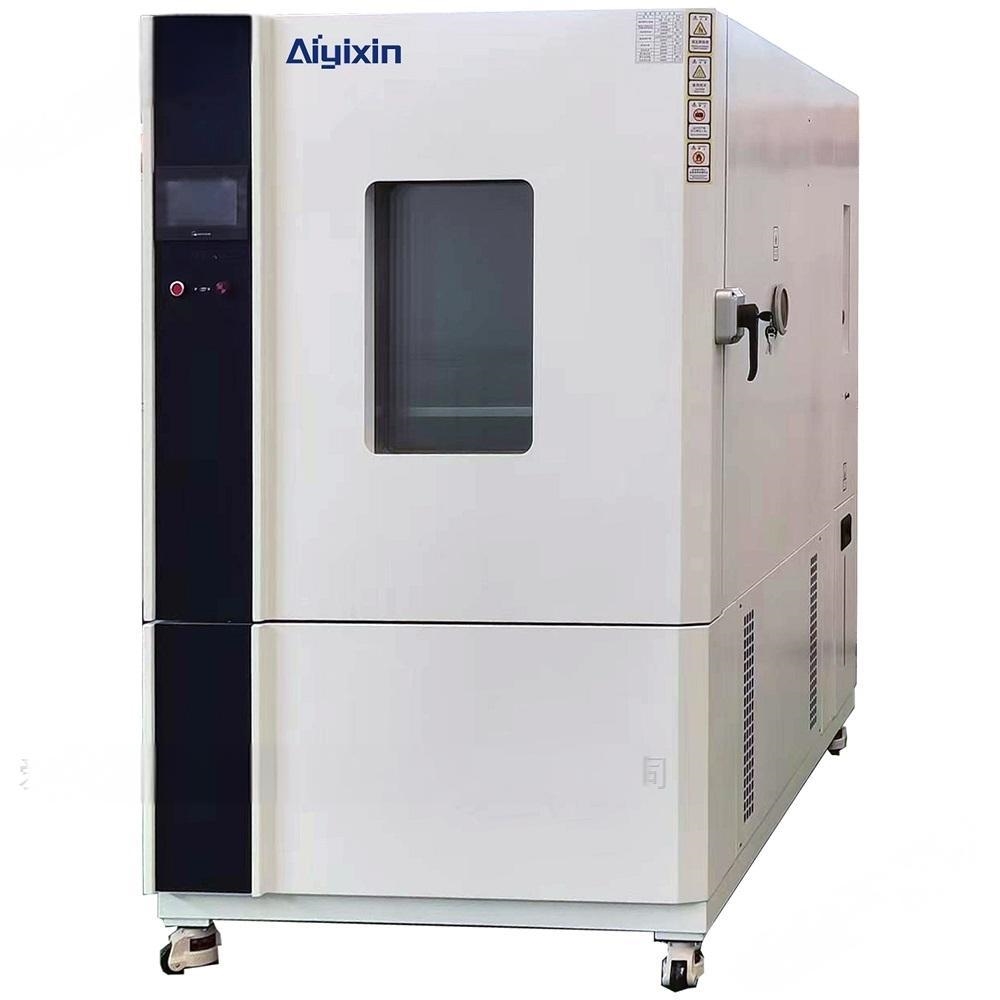
High and low temperature damp heat testing machinePart of the composition:
1. Temperature control system: including heating system and cooling system. The heating system raises the temperature inside the test chamber through an electric heater, while the cooling system lowers the temperature inside the test chamber through components such as a compressor, condenser, and evaporator.
2. Humidity control system: Humidity control is mainly achieved through humidifiers and dehumidifiers. Add water vapor to the humidifier inside the test chamber to increase humidity; Dehumidifiers remove water vapor through condensation, reducing humidity.
3. Control panel: used for operating and setting test parameters such as temperature and humidity. The control panel usually has an LCD display screen or touch screen for real-time display of temperature, humidity data, and other information during the testing process.
4. Internal cavity space: The test sample is placed inside the test chamber, which is usually made of stainless steel or other corrosion-resistant materials to ensure the long-term stability of the chamber in high temperature and high humidity environments.
5. Sensor: used for real-time monitoring of temperature and humidity inside the test chamber, and feedback the data to the control system for adjustment.
6. Alarm system: When the temperature and humidity exceed the set range, the alarm system will sound an alarm to ensure the safety of the testing process.
Working Principle:
1. Temperature control: After the testing machine is turned on, the temperature inside the testing chamber is adjusted to the set value through a heating or cooling system. Heating systems are usually provided with heat by electric heaters, while refrigeration systems reduce temperature through the evaporation and heat absorption of compressors and refrigerants. The temperature variation range is usually -70 ℃ to+150 ℃, and some devices also support a wider temperature range.
2. Humidity control: Humidity control usually relies on humidifiers and dehumidifiers. The humidifier evaporates moisture into water vapor and distributes it in the test chamber through air circulation to achieve the set humidity value. Dehumidifiers use low-temperature action to condense water vapor, thereby reducing humidity.
3. Loop control: During the experiment, temperature and humidity will be continuously adjusted and cycled. The control system will continuously monitor and adjust the environment inside the box according to the set test conditions to maintain stable test conditions.
When using a high and low temperature wet heat testing machine, the following precautions should be taken:
1. Setting of temperature and humidity: Reasonably set the temperature and humidity values according to the test requirements to avoid exceeding the working range of the equipment excessively and causing equipment damage.
2. Maintenance and upkeep of equipment: Regularly inspect important components such as temperature and humidity sensors, heaters, and refrigeration systems to ensure their normal operation. Clean components such as humidifiers and dehumidifiers to avoid the accumulation of scale and impurities.
3. Preparation before the experiment: Ensure that the test sample is prepared as required before being placed in the equipment, such as wiring, fixing, etc., to avoid test failure due to problems with the sample itself.
4. Monitoring of the experimental process: During the experimental process, the operating status and temperature and humidity changes of the equipment should be monitored in real time to ensure its stability and avoid problems such as equipment failure or excessive temperature and humidity fluctuations.
5. Safe use: When operating the equipment, follow the instructions for use, ensure good ventilation in the laboratory, and avoid adverse effects of high temperature or moisture on the operators.