-
E-mail
2280441557@qq.com
-
Phone
13524971329
-
Address
501, Building 5, No. 59 Shennan Road, Minhang District, Shanghai
Aixing (Shanghai) Industrial Intelligent Technology Co., Ltd
Detection limit of ampoule residual oxygen analyzer and correction method for measurement error of small volume headspace (less than 0.5 mL)
Date: 2025-11-14Read: 58
Ampoules have become a commonly used packaging form in the field of biologics due to their disposable and excellent sealing properties. However, the headspace volume of ampoules is usually small (often less than 0.5 mL), which poses a high challenge for residual oxygen detection - traditional residual oxygen meters are susceptible to gas diffusion limitations, sensor response delays, and measurement boundary effects in small volume headspace environments, resulting in insufficient detection limits or large errors, directly affecting the accuracy of drug residual oxygen control. Therefore, clarifyAmpoule residual oxygen analyzerThe detection limit characteristics and the establishment of a scientific small volume headspace measurement error correction method have become the key to ensuring the reliability of detection results.
Firstly, it is necessary to understand the physical limitations of small volume headspace: when the headspace volume is less than 0.5 mL, the free path of gas molecules is shortened, the contact efficiency between oxygen and sensors is reduced, which may result in lower detection limits of the instrument (such as conventional 0.1% O ₂) that cannot meet practical needs (some drugs require residual oxygen ≤ 0.01%). Meanwhile, the poor uniformity of gas mixing in small spaces and local differences in oxygen concentration may result in insufficient representativeness of single point measurements; In addition, the bottleneck structure of ampoules (such as slender necks) will further hinder gas diffusion, prolong equilibrium time, and increase measurement delay errors.
To address the above issues, error correction needs to be optimized collaboratively from three aspects: instrument principles, measurement methods, and data processing. In terms of instrument selection, priority should be given to residual oxygen meters based on the principle of fluorescence quenching - their sensors are more sensitive to low concentrations of oxygen (with a detection limit of up to ppm), and do not require the consumption of gas samples, making them more suitable for small volume environments. Before measurement, the instrument needs to be baseline calibrated with a standard gas (such as a known concentration of nitrogen oxygen mixture) to eliminate systematic errors caused by sensor zero drift and sensitivity attenuation; For small volume headspace, it is recommended to use the "multiple equilibration taking the mean" strategy: place the ampoule in a constant temperature environment (such as 25 ± 1 ℃) and let it stand for 10-15 minutes until the gas is fully diffused and uniform before testing to avoid instantaneous errors caused by temperature fluctuations or imbalances.
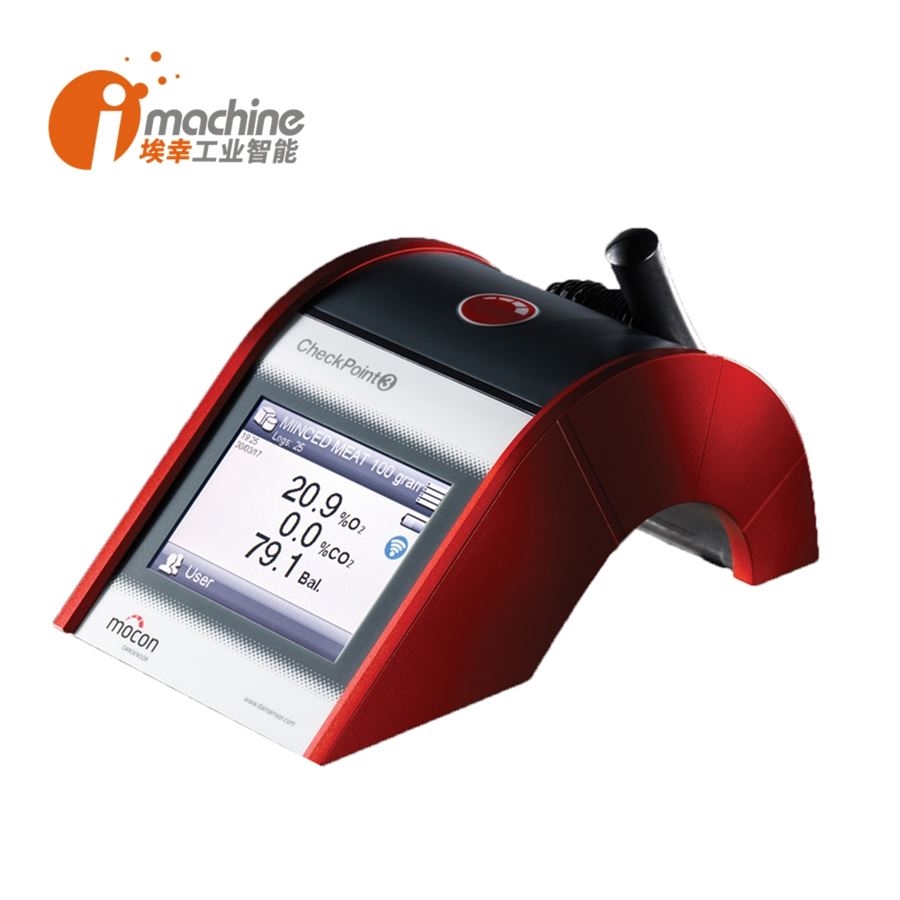
The more crucial correction method is to introduce a 'volume correction factor'. Calculate the actual number of moles of oxygen in a small volume headspace through mathematical modeling (such as the ideal gas state equation), and compare it with the measured value at a standard large volume (such as 5 mL) to establish a concentration conversion relationship. For example, if the oxygen concentration measured in a small volume headspace is 0.05%, but the actual total gas volume is only 1/10 of the large volume, the effective headspace volume needs to be calculated based on the specific size of the ampoule (such as diameter and height), and the original data needs to be volume ratio corrected. Some advanced instruments have built-in small volume mode, which automatically compensates for boundary effects through algorithms. Users only need to input ampoule specifications to obtain the corrected results.
In addition, operational details also affect error control: when opening ampoules for sampling, fingers should be avoided from touching the bottle mouth (to prevent oil contamination from affecting gas permeation), and the pipeline should be purged with nitrogen gas before testing to eliminate residual oxygen interference; For batch testing, it is recommended to select 3-5 ampoules as parallel samples and evaluate the overall measurement reliability through statistical methods such as standard deviation analysis.
In conclusion,Ampoule residual oxygen analyzerThe error correction in small volume headspace measurement essentially involves a comprehensive approach of instrument performance adaptation, measurement process optimization, and mathematical model compensation to shift the detection limit from "theoretically feasible" to "practically accurate". This not only provides technical support for residual oxygen control of low headspace drugs, but also is a necessary support for pharmaceutical companies to meet strict quality standards.