-
E-mail
2280441557@qq.com
-
Phone
13524971329
-
Address
501, Building 5, No. 59 Shennan Road, Minhang District, Shanghai
Aixing (Shanghai) Industrial Intelligent Technology Co., Ltd
Correct operating steps and precautions for oxygen and moisture permeability tester
Date: 2025-10-21Read: 57
Oxygen and moisture permeability tester is the core equipment for quality control of packaging materials, widely used in fields such as food, medicine, electronic components, etc. Mastering the correct operating steps and precautions can ensure accurate test data (deviation<± 3%) and extended equipment lifespan (>5 years).
1、 Operation steps:
Step 1: Power on and Check
Connect the power supply (220V ± 10%, reliable grounding), turn on the instrument power switch, and wait for the system self-test (display screen lights up, sensor initialization is complete). Check whether the gas pipelines (oxygen, nitrogen, dry nitrogen) are securely connected (without looseness or leakage, use soapy water to detect the interface), and confirm that the testing chamber is clean (without residual samples or impurities). Meanwhile, check if the temperature and humidity sensor (accuracy ± 0.5 ℃/± 2% RH) is functioning properly (displaying ambient temperature and humidity).
Step 2: Sample installation
Cut the packaging material to be tested (such as film, composite film) into standard sizes (such as 50mm × 50mm), and place it flat into the fixture in the testing chamber (with uniform fixture pressure to avoid sample wrinkles or damage). For irregular samples such as bottles and bags, use specialized adapters (ensuring good sealing and no gas leakage). After installation, close the test chamber door (lock the handle to prevent accidental opening during testing).
Step 3: Parameter Setting
Select the mode (oxygen permeable mode or moisture permeable mode) according to the testing requirements and set the parameters according to the standard:
• Oxygen permeability mode: oxygen flow rate (usually 50-100mL/min), test temperature (23 ± 2 ℃ or 38 ± 2 ℃), relative humidity (0% RH or 10 ± 2% RH on the low humidity side, adjusted according to standards on the high humidity side);
• Moisture permeable mode: dry nitrogen flow rate (50-300mL/min), test temperature (23 ± 2 ℃), relative humidity (90 ± 2% RH on the high humidity side, 0% RH or 10 ± 2% RH on the low humidity side).
Some instruments support preset programs (such as ASTM D3985 oxygen permeability standard, GB/T 1037 moisture permeability standard), which can be directly called and fine tuned.
Step 4: Testing and Monitoring
Start the testing program, the instrument automatically controls the gas flow rate and temperature and humidity, and begins the penetration test. Real time monitoring of test chamber pressure (oxygen permeable mode) or low humidity side humidity (moisture permeable mode), observing data curves (normally in a stable rising or equilibrium state). If there are abnormal fluctuations (such as a sudden increase in oxygen permeability rate>20%), check whether the sample is damaged (such as pinholes in the film) or whether the pipeline is leaking (re tighten the interface).
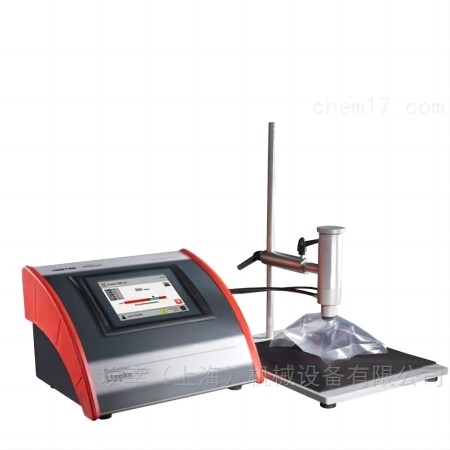
Step 5: Result output and shutdown
After the test is completed (usually 24-48 hours in oxygen permeability mode and 4-24 hours in moisture permeability mode), the instrument automatically calculates and displays the oxygen permeability rate (cm ³/(m ² · 24h · 0.1MPa)) or moisture permeability rate (g/(m ² · 24h)). Record data (can export to Excel or PDF report), open the test chamber door, and take out the sample. Close the gas valve (stop gas supply), disconnect the power supply, and blow the chamber with dry nitrogen gas for 1-2 minutes (to remove residual gas and prevent corrosion).
2、 Precautions
Taboo 1: When testing high barrier materials (such as aluminum foil film), if the testing time is too short (<12 hours), the data may not be stable (error>± 10%);
Taboo 2: Poor sealing of sample edges (fixture not tightly pressed) can cause gas leakage from the edges (false high oxygen/moisture permeability);
Taboo 3: Long term use (>1 month) without pipeline blowing (residual oxygen or water vapor will corrode the sensor and reduce accuracy);
Taboo 4: Clean the chamber with organic solvents (such as acetone) (which may dissolve plastic parts, it is recommended to wipe with anhydrous ethanol cotton balls).
Following the correct operating procedures and precautions, the oxygen and moisture permeability tester will become a reliable tool for evaluating the performance of packaging materials, providing accurate data support for product quality and shelf life.