-
E-mail
market@exponentsci.com
-
Phone
13322809603
-
Address
Room 403, Building B, Huicheng Building, No. 602 Guangshan 2nd Road, Tianhe District, Guangzhou City
Aibo Neng (Guangzhou) Science and Technology Co., Ltd
Experimental study on surface spice detection of tobacco leaves based on hyperspectral imaging
Date: 2025-10-24Read: 1
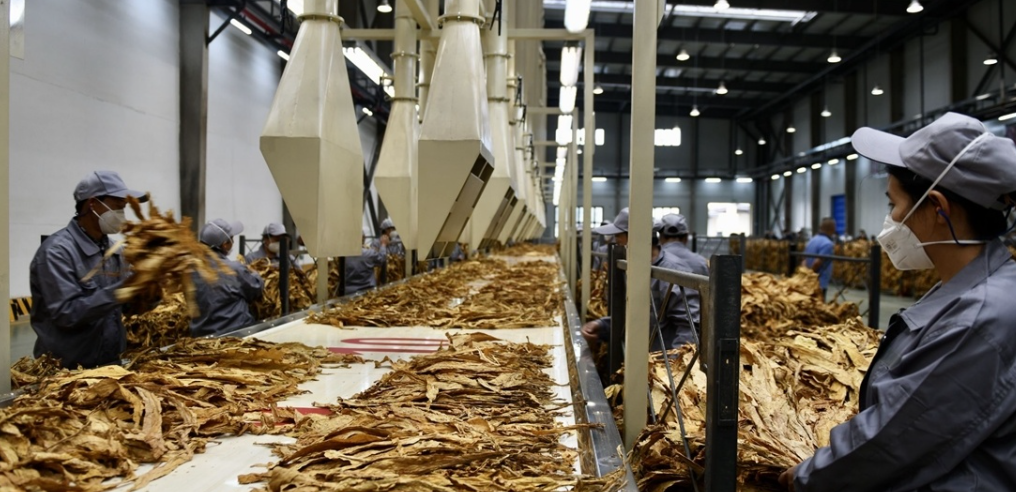
In cigarette production, the presence and uniform application of flavorings are key factors in ensuring product quality consistency. This study conducted exploratory experiments using hyperspectral imaging technology to analyze the spectral characteristics of spices and evaluate their ability to distinguish them from moisture interference.
Experimental environment
This experiment used a near-infrared hyperspectral camera to collect data from tobacco samples. This camera is based on InGaAs detector, operating in the wavelength range of 900-1700nm, with a spectral resolution of 8nm and 640 spatial pixels, capable of accurately capturing the fine spectral features of tobacco leaf surfaces. During the experiment, we will utilize its adjustable frame rate and exposure time, support for external triggering, and ROI windowing functions to optimize acquisition efficiency and ensure data consistency.
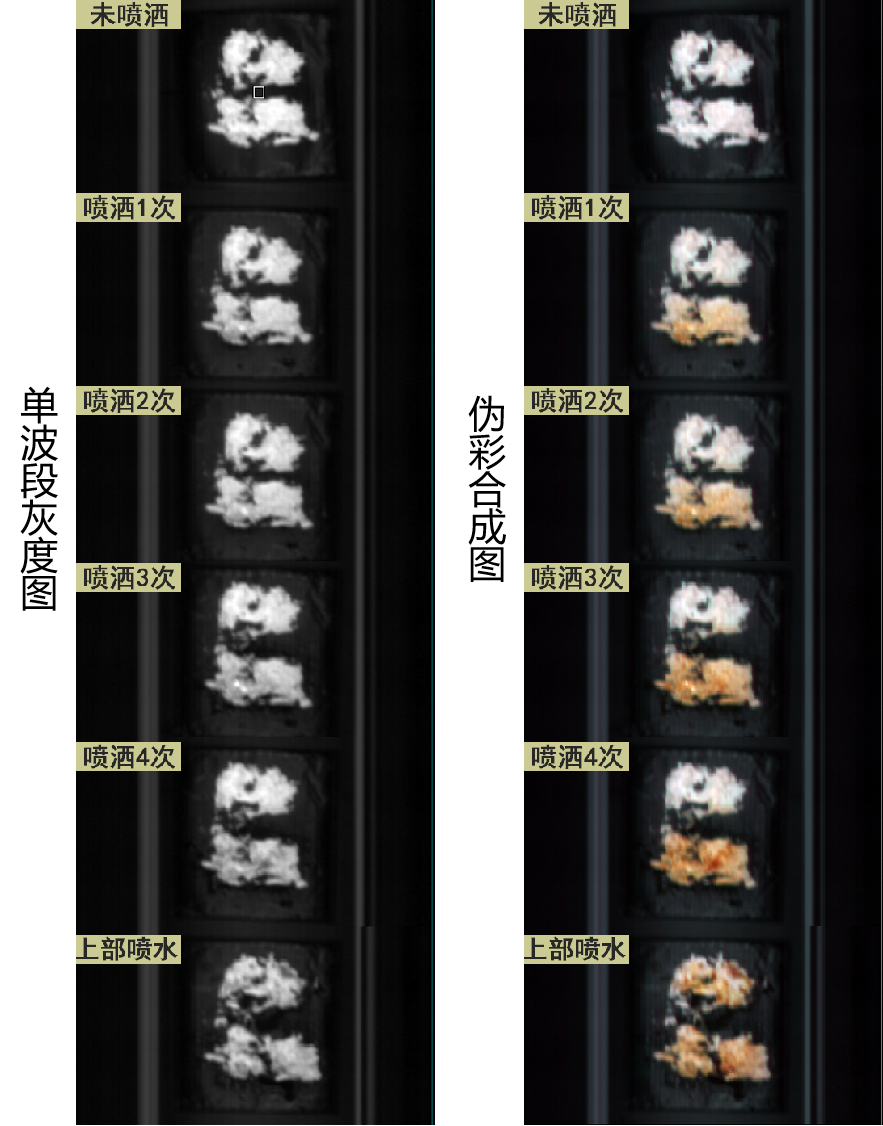
The test samples were divided into six groups for continuous measurement.
Firstly, collect overall dried tobacco leaf samples as benchmark data;
Subsequently, liquid flavorings were sprayed gradually in the lower half of the sample, forming five gradient samples with different spray amounts to study the effect of spice dosage on spectral response;
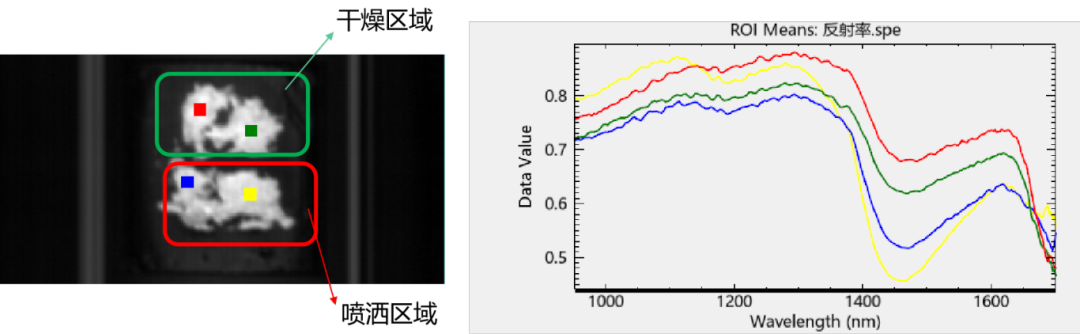
The last group sprayed tap water on the upper part and spices on the lower part, and distinguished the spectral differences between spices and water on the surface of tobacco leaves through comparative analysis.
Throughout the entire data collection process, environmental conditions and camera parameters will be strictly controlled. By analyzing the spectral characteristics of tobacco leaves in different states, it is expected to establish a corresponding relationship between spice distribution and spectral changes, providing an effective means for non-destructive testing of tobacco leaf quality.
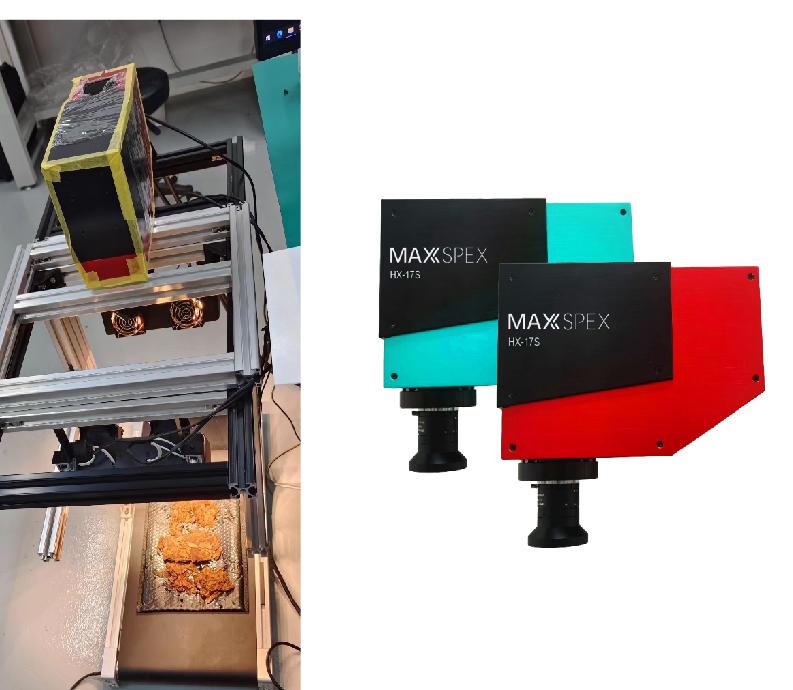
Hyperspectral data

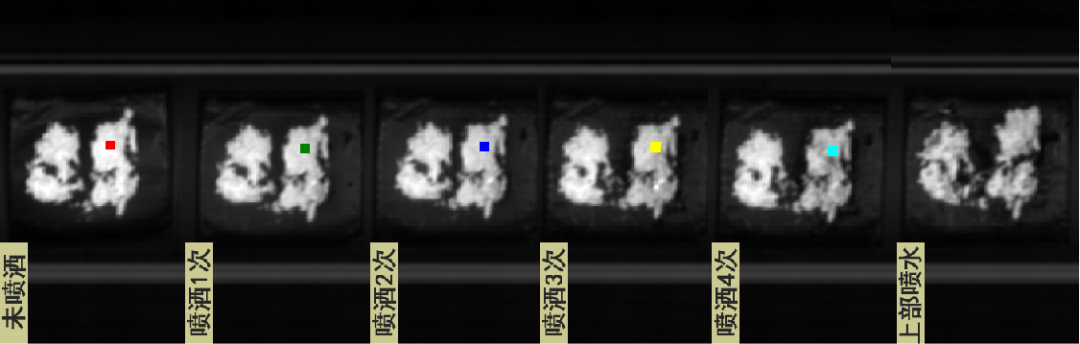
Hyperspectral curve
Unspray area:

Spray once:
Spray twice:
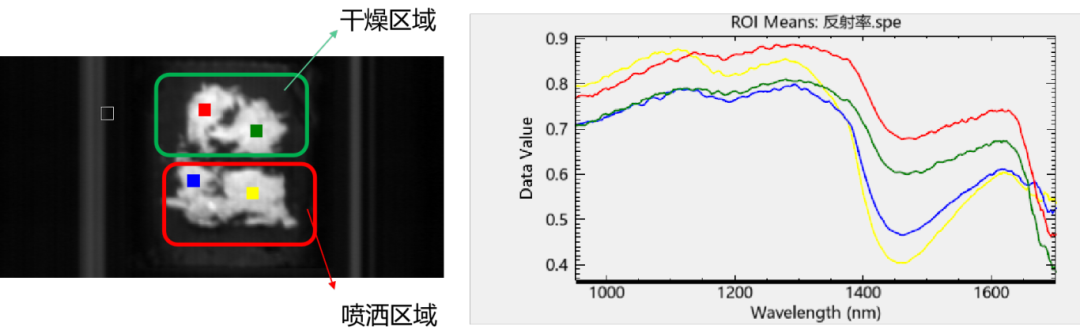
Spray 3 times:
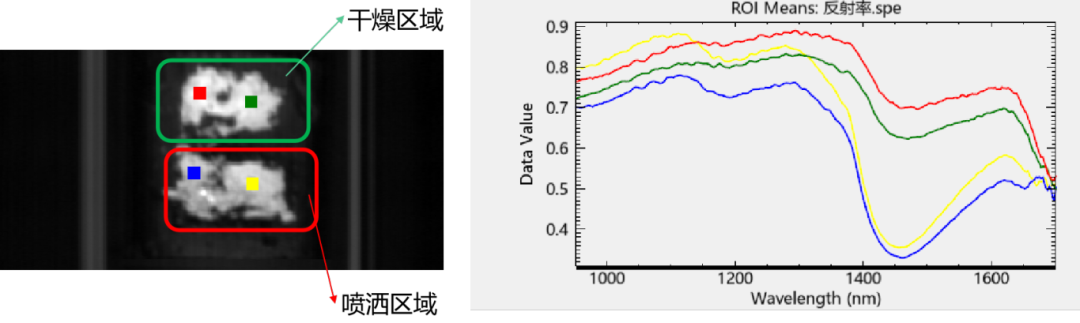
Spray 4 times:

Pseudo color synthesis:
Summary
Analysis shows that the spectral curve of tobacco leaves after spice treatment exhibits a significant absorption valley at 1450nm. By optimizing the combination of three bands for image visualization, the processing area can be effectively highlighted. But the core difficulty of this study lies in the highly overlapping spectral characteristics of spices and water, making it difficult to effectively distinguish them.